In school we have 4 math classes a week. Sometimes it can be very difficult but its always feels good to complete a hard task. Our math teachers are very precise, punctual and helpful. They are the perfect definition of a teacher. Math is the foundation of the whole sport. It is also very important in sport, because cars are half of the money they need to allocate for the whole year. Precision is very important in Formula 1, as tenths of a second can make the difference and millimetres can help or hinder. Statistics are made after every race time is calculated every time after each lap, speed is also very important matter. And all of these things are the question of mathematics.

Aerodynamics 

In Formula 1, aerodynamics is a cornerstone of performance. Every car is designed to slice through the air with minimal resistance. From the shape of the front wing to the intricate details of the diffuser, mathematics plays a pivotal role in understanding airflow patterns and optimizing downforce. Equations from fluid mechanics, such as Bernoulli’s principle and the Navier-Stokes equations, help engineers predict how air will behave around a car and allow them to fine-tune its design for optimal performance.

Friction

Tire performance is paramount in Formula 1. Mathematical models come into play to understand the complex interactions between tires and the track surface. Engineers analyze the grip, wear, and temperature of the tires using mathematical equations to optimize strategies and pit stops during a race.

Data analysis

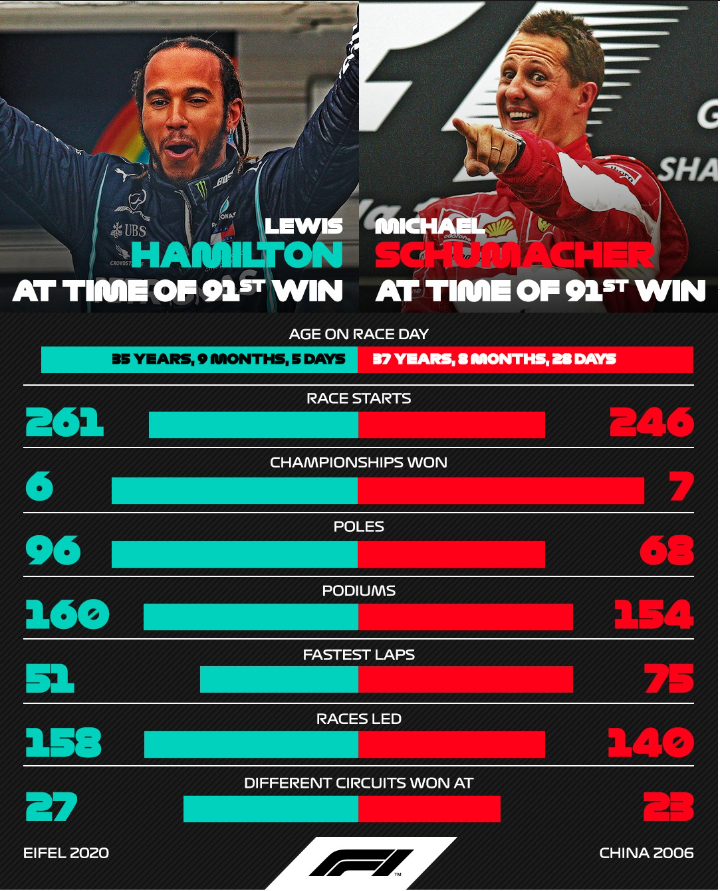
Formula 1 generates an immense amount of data during each race weekend. With hundreds of sensors on each car collecting data on variables like speed, acceleration, tire pressure, fuel consumption, and more, the importance of data analysis cannot be understated. Mathematical models and algorithms are employed to process this data, helping teams make strategic decisions during races and plan for future events more effectively.

Risks, weather, predictions

In a sport where margins for error are razor-thin, probability and risk management are essential. Mathematics aids in assessing the likelihood of various outcomes, such as the probability of a crash, chances of rain during a race, or the likelihood of an overtake based on a driver’s performance. These assessments guide drivers and teams in making informed decisions while mitigating potential risks.